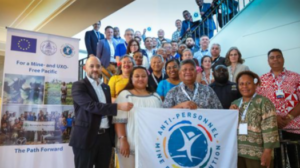

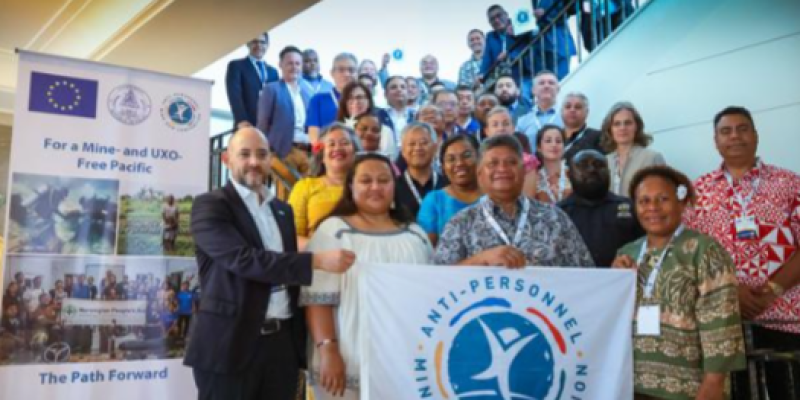
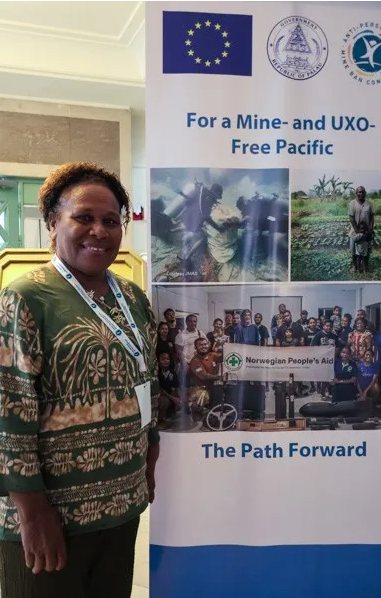
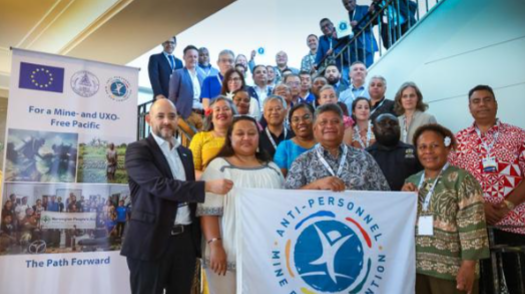
From September 7-9, Mette Eliseussen of SafeGround and Maeverlyn Pitanoe of Bomb Free Solomon Islands attended the Regional Stakeholder Dialogue on the Implementation of the Convention on Anti-Personnel Mines in the Pacific: Aligning with the 2050 Strategy for the Blue Pacific Continent and Regional Security Agenda.
The Regional Stakeholder Dialogue was hosted by the Ministry of State of Palau, with support provided through a European Union Council Decision to support implementation of the Convention and technical backing from the ISU.
The Dialogue provided a practical forum for Pacific States Parties to exchange experiences on implementation of the Convention, including national implementation measures, cooperation and assistance, and residual contamination management. It also offered an opportunity to explore synergies with related humanitarian disarmament instruments and regional priorities in the Pacific.
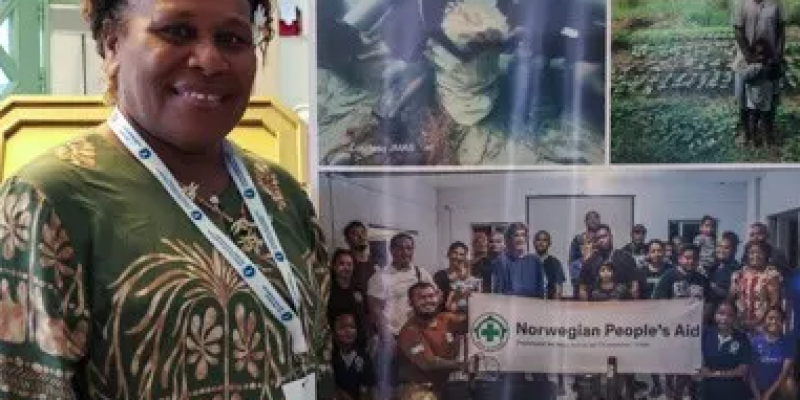
Below is Maeverlyn Pitanoe’s report following the conference. Maeverlyn participated with the support of SafeGround.
My Palau Journey: A Survivor’s Voice for Solomon Islands
Travelling to Palau in September 2026 was more than simply attending a regional meeting for me. It was a deeply personal journey as a UXO survivor from the Solomon Islands and as the Founder and Chairperson of Bomb Free Solomon Islands (BFSI). I travelled with my own story, but I also carried the stories, pain and hopes of many other survivors, victims and families who continue to live with the consequences of unexploded ordnance in our communities.
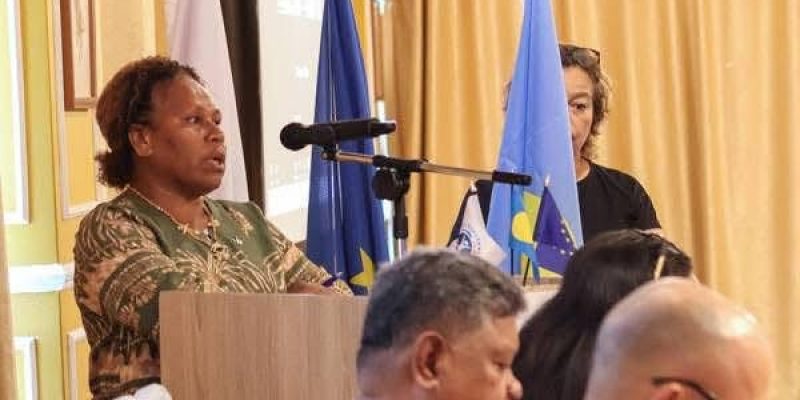
The Regional Stakeholder Dialogue in Koror, Palau, from 7–9 September gave me an opportunity I will always value. For the first time, I was able to sit in a regional space with Pacific countries, international partners, UXO practitioners, and other stakeholders and speak openly about what UXO means from the perspective of someone who has actually lived through an explosion.
I shared my experience of 9 May 2021, the day my life changed forever. What happened while I was cooking at a church fundraising activity was not something I ever imagined would happen to me. I survived, but the consequences did not end when I left the hospital. The injuries, changes to my body, the pain, the impact on my ability to work, the effect on my family and the emotional scars have continued long after the explosion.
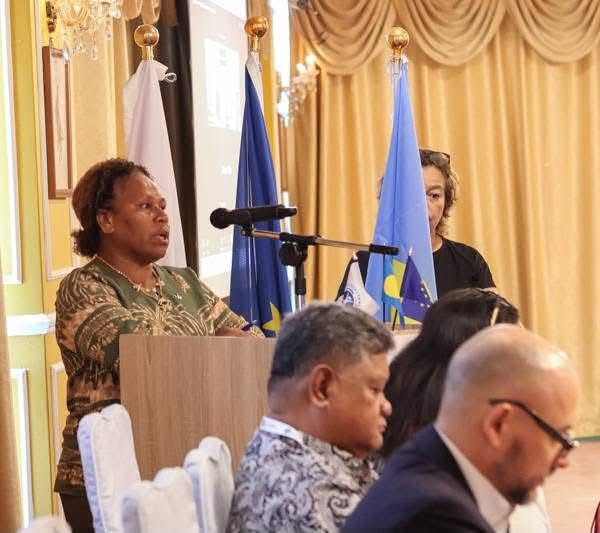
Standing in Palau and telling that story was not easy. But I knew I was not speaking only for myself.
I was speaking for those who lost their lives. I was speaking for families who lost loved ones and breadwinners. I was speaking for survivors who continue to live with injuries and disabilities. I was speaking for people who may have received emergency treatment but still do not know where to turn for help rebuilding their lives.
One of the strongest messages I carried into the Dialogue was that UXO is not only a clearance issue. It is a humanitarian, development, community, and survivor issue.
We often talk about finding and destroying UXO, and rightly so. But I kept asking myself: What happens to the survivor after the UXO has been cleared? What happens after the hospital? Who helps a person who can no longer work as before? Who helps the family whose income has been lost? Who helps survivors deal with the emotional and social consequences?
For me, this is where victim assistance must become much more meaningful.
Victim assistance should not stop at treatment. It must help people rebuild their lives.
During the Dialogue, I also had the opportunity to listen and learn from other Pacific countries and international partners. I asked questions about how survivors are identified, supported and followed up, how countries have developed victim-assistance systems, and what Solomon Islands can learn from their experiences.
Read Maeverlyn Pitanoe’s address to delegates here.
Learn more about Bomb Free Solomon Islands with this link to their Facebook page:
https://www.facebook.com/p/Bomb-Free-Solomon-Islands-61574977565288